
Radiators · Cape Town
How radiators work, the types, and when to repair or replace
Your radiator is the main heat exchanger in the engine cooling system. Hot coolant flows through it; air through the fins carries that heat away so the engine stays in its working temperature range.
How it works
Heat out of the engine, into the air
Same cycle on cars, bakkies, trucks and generators — only the size and packaging change.

1. Heat leaves engine
Coolant absorbs combustion heat in the block and head.

2. Into the radiator
Thermostat opens and hot coolant enters the inlet tank.

3. Tubes & fins
Heat moves from liquid into the tube walls and fin pack.

4. Airflow
Road speed and/or the fan push air through the fins.

5. Coolant returns
Cooled coolant goes back to the engine and repeats.
Radiator types
Different builds for different jobs
Materials and tank design decide how repairable a radiator is — and whether re-coring is realistic.
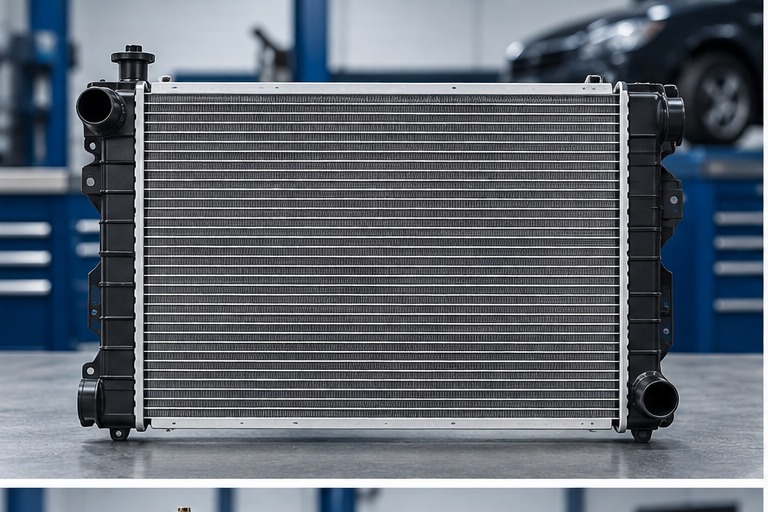
Aluminium core + plastic tanks
Most modern cars and bakkies. Light and efficient. Plastic end tanks are crimped onto an aluminium core.
Repair note: core/joint leaks can often be fixed. Cracked plastic tanks usually mean full replacement — generally not re-cored.

All-aluminium radiators
Core and tanks in aluminium. Used where weight, strength and cooling performance matter.
Repair note: many leaks are repairable. Re-coring is often more limited than copper-brass.
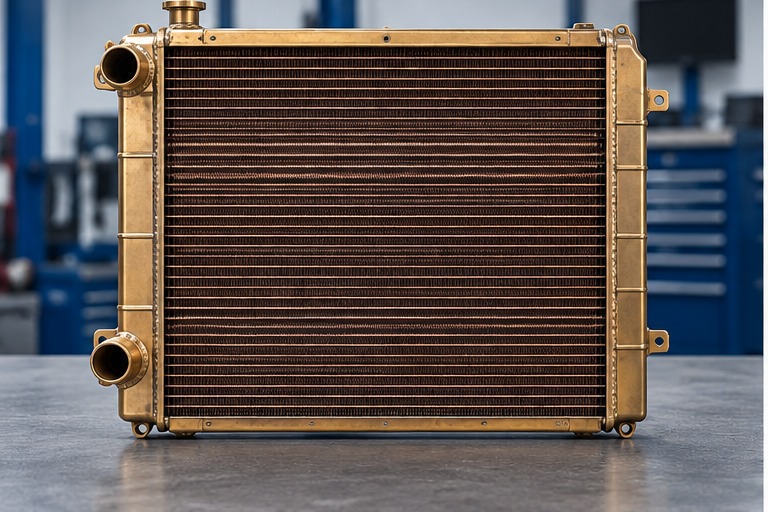
Copper & brass radiators
Traditional, heavier construction. Common on classics, older vehicles, some trucks and specialist plant.
Repair note: highly repairable. Often the best candidate for re-coring when tanks and fittings are sound.
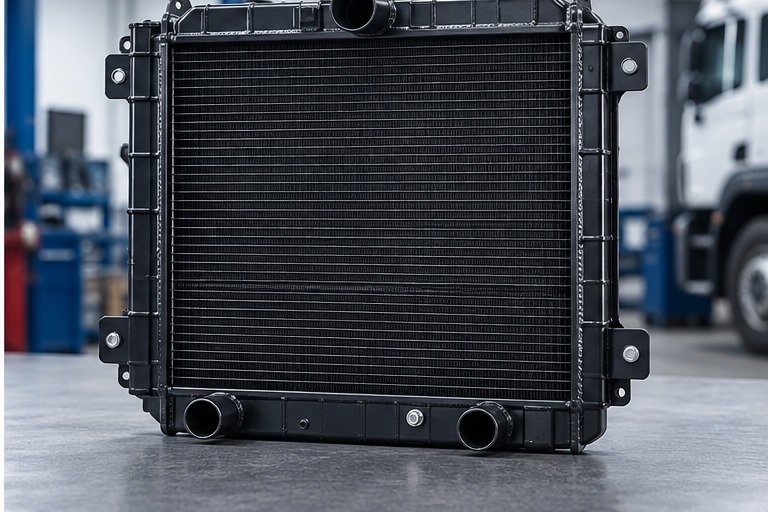
Truck & heavy-duty radiators
Built for sustained load and vibration — trucks, buses, agricultural and construction machinery.
Repair note: inspected for commercial uptime. Repair, re-core or replace depends on damage and availability.
Also worth knowing
Flow layout & industrial units
Downflow vs crossflow
- Downflow — tanks top and bottom; coolant flows downward.
- Crossflow — tanks on the sides; coolant flows across (very common on modern vehicles).
- Same job, different packaging for the engine bay.
Industrial / generator radiators
- Cool engines that don’t get the same road airflow as a car.
- Fan and shroud design matter as much as the core.
- We check leaks, corrosion, fin condition and cooling for continuous or high-load running.
Repair · re-core · replace
What we recommend depends on the unit
We pressure-test first — then advise the practical option, not a one-size-fits-all quote.
| Option | When it makes sense |
|---|---|
| Repair | Localised leaks or damage on a sound core |
| Re-core | Especially copper-brass, where tanks and fittings are still good |
| Replace | Cracked plastic tanks, severe core damage, or when repair isn’t economical |

Radiator repairs
Leak repairs, cleaning, testing and practical fixes where the core is still viable.

Testing & diagnosis
Pressure testing and cooling-system checks before we commit to repair or replacement.

Workshop capability
Hands-on work for automotive, trade and industrial radiators in Montague Gardens.
Coolant & antifreeze
Types of antifreeze
Coolant chemistry matters. Matching the right antifreeze type helps protect your radiator against corrosion, overheating and freeze damage. Ask us if you are unsure which one your vehicle or equipment needs.

Radiator King
Need a radiator inspected, repaired or replaced?
Bring it to our Montague Gardens workshop. We’ll pressure-test it and tell you straight whether repair, re-core or replacement makes sense.
Mon–Thu 08:00–16:00 · Fri 08:00–15:00 · Unit 3, 5 Station Road, Montague Gardens
